
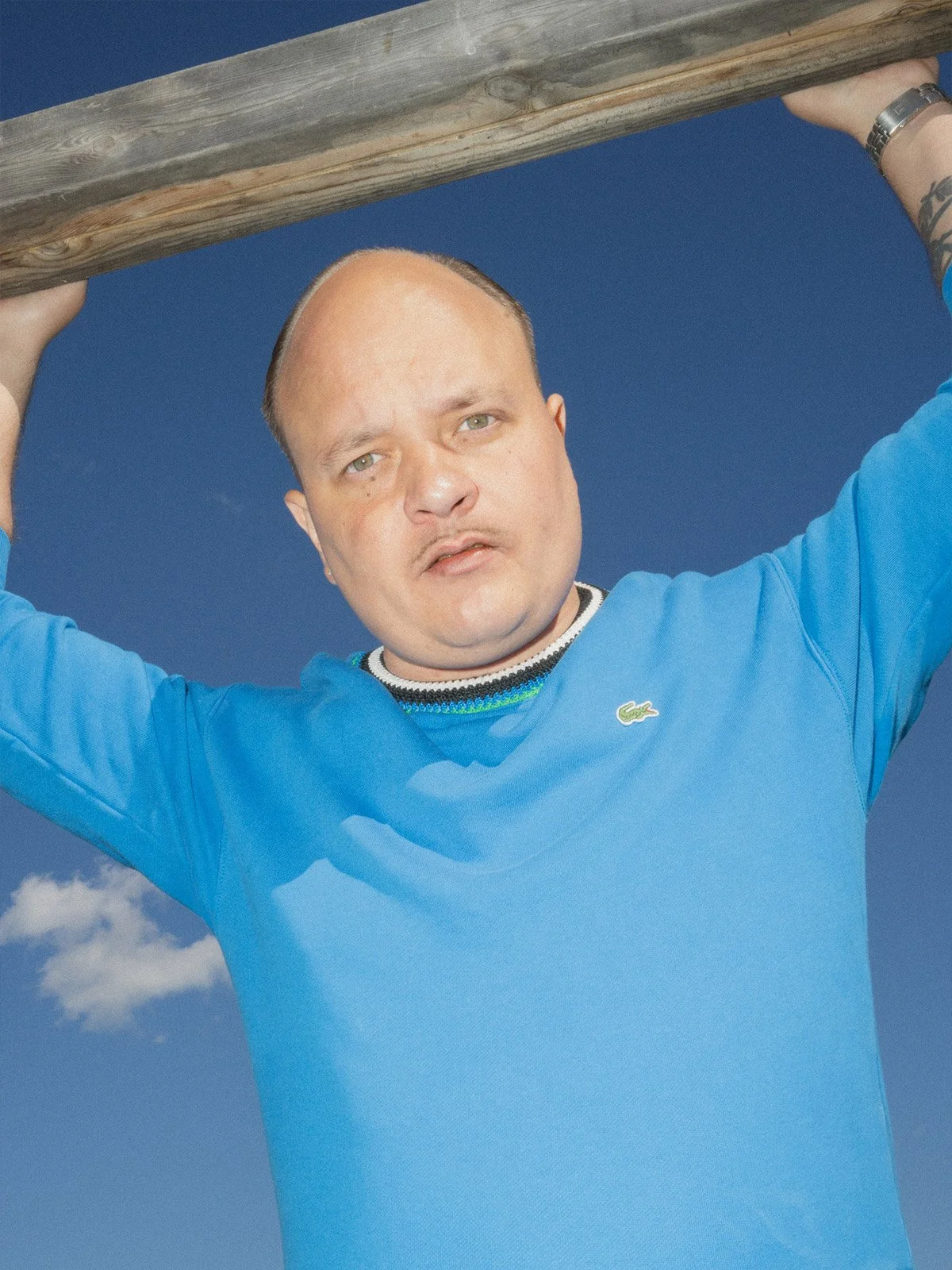
David Ritschard
David Ritschard stretches out his arms, leans forward, and lets the crowd catch him. Two thousand pairs of hands carry him across the venue floor. He closes his eyes. The place is Fållan, in southern Stockholm. Spring 2022. In the space of a single year, David Ritschard has become one of Sweden's most beloved and talked about new artists.
His album Blåbärskungen came out in autumn 2021, preceded by a string of acclaimed singles. He'd already built a loyal following well before that, through years as a hardworking member of the bluegrass and country bands Spinning Jennies and The Greenline Travellers, and later with his celebrated solo debut Brobrännaren. But Blåbärskungen was where everything clicked into place. Aftonbladet named it Album of the Year, and DN called it "almost genius."
The real shift, though, happened with the audience. What had once been the passion of a small circle of connoisseurs suddenly opened up in every direction. People of every age and background started showing up to his shows, spreading the word about the man from Björkhagen. His generosity, his sincerity, his humor, his sheer idiosyncrasy — it was something people didn't know they were missing until they had it, and then they couldn't let go.
But David Ritschard's success isn't really about David Ritschard. It's about the people he sings about: the lives, the worlds, the stories that fill his songs, often drawn from a working class reality rarely given voice in Swedish music.
In autumn 2025, he played 15 (fifteen) sold out shows at Södra Teatern in Stockholm. A historic run, and a milestone not just for him, but for Stockholm's cultural life as a whole.
The audience's hands will keep carrying David Ritschard. High, and for a long time yet.